

My starting advice for exercise with MS: try 2 to 5 minutes, not a full workout. If that feels like too much, try a few seated movements. Check with your MS care team about a safe starting pace.
Here are seven ways I’d approach it:
- Start small: Choose a few minutes of movement you can repeat.
- Keep it gentle: Try walking, gentle yoga, or water exercise.
- Use support: Sit or use support when standing feels difficult.
- Plan breaks: Rest before fatigue builds.
- Stay cool and hydrated: Keep water nearby and choose a cool space.
- Match today’s symptoms: Change your movements, resistance, or session length to fit your energy and balance.
- Build slowly: Add time, repetitions, or resistance – <u>one at a time</u>.
Keep the effort easy enough to talk comfortably. Stop for pain, dizziness, or unusual symptoms, and get medical advice if symptoms are severe or don’t settle.
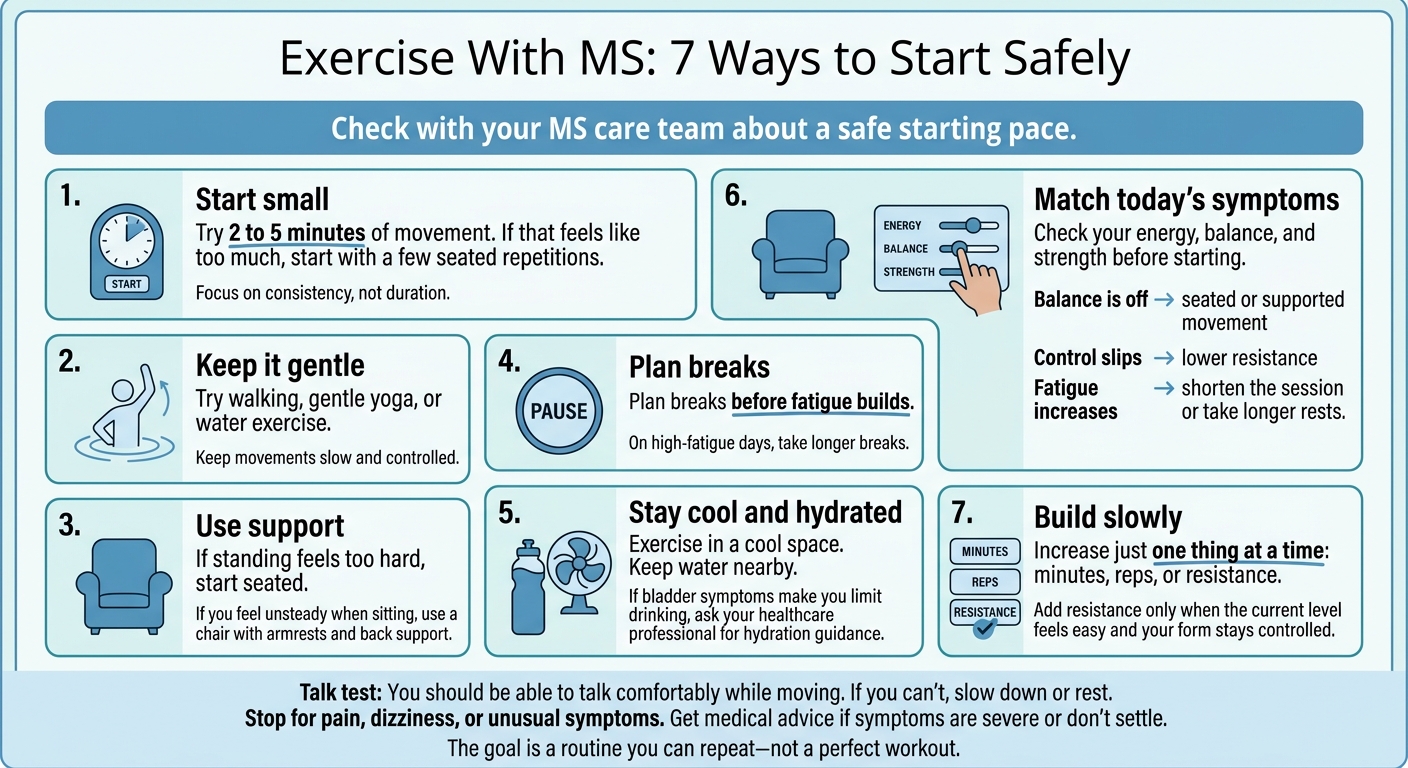
Exercise With MS: 7 Ways to Start Safely
Before You Start: Exercise Safety With MS
Before you begin, check with your physician or neurologist about a starting pace that fits your symptoms. Mention any trouble with balance, walking, or transfers. A physical therapist can help with mobility, balance, and joint pain.
Ask which movements and equipment suit your needs. If you use a treadmill, attach the safety cord so it stops if you lose your balance.
Use the talk test to check your effort: You should be able to talk comfortably while moving. If you can’t, slow down or rest. Taking longer rests also lowers the intensity.
Heat can temporarily worsen MS symptoms. Exercise in a cool space, and ask about cooling gear if heat affects you. If symptoms worsen or feel unusual, severe, or lasting, stop and get medical advice.
1. Start With a Few Minutes
Once you’ve covered the safety basics, try 2 to 5 minutes of movement you can repeat. If that feels like too much, start with a few seated repetitions.
Two or three short bouts can add up. Focus on consistency, not duration. Stop or adjust any exercise that causes pain, dizziness, or unusual fatigue.
Long sessions can make fatigue worse.
2. Choose Gentle, Low-Impact Movement
When you’re ready to move, start with the easiest version of an activity you know. Low-impact exercise limits jarring and stress on your joints. It can still build strength, provide aerobic exercise, and support heart health.
- If you walk comfortably, start with walking rather than trying to jog. For stiffness, try gentle yoga.
- Keep your movements slow and controlled to help maintain your form.
- Water buoyancy supports your body and makes hip and leg movement easier. Consider water aerobics or swimming.
- If you need more support, try seated exercise or movements with support.
3. Use Seated or Supported Exercises
If standing feels too hard, start seated. Seated exercises help build strength and mobility with less risk of falling. They can work your arms, shoulders, back, chest, and legs. If you feel unsteady when sitting, use a chair with armrests and back support.
Before moving, gently tighten your abdomen to brace your core. Start with one controlled movement you can repeat.
For a seated shoulder raise, sit with your arms at your sides and hold light dumbbells or resistance bands. Slowly raise straight arms in front of your body until they’re parallel to the floor, then lower them slowly. If your shoulders feel uncomfortable, try turning your palms toward each other rather than facing them down.
Ask a physical therapist which exercises and resistance to use if weakness, pain, or instability makes movement difficult. Don’t push through movements you can’t control.
4. Plan Rest Breaks
Even seated or supported exercise can drain your energy. Plan breaks before fatigue builds, and make rest part of your workout to help manage MS fatigue.
On high-fatigue days, take longer breaks to keep the workout easier to sustain. During each break, wait until your breathing and heart rate feel steady. Ease up if you feel too warm. If you feel dizzy, stop rather than pushing through the set.
Start with one or two exercises, and use breaks to keep the effort within your limits. Stop before fatigue spikes. If heat adds to your fatigue, use cooling steps next.
5. Stay Cool and Hydrated
Plan how you’ll stay cool before you start. Match that plan to your workout.
Exercise in an air-conditioned space to help keep your body temperature down. Use a cooling vest. If cost is a barrier, call MSAA at 800-532-7667 to ask about cooling equipment assistance and whether you qualify.
Keep water nearby. If bladder symptoms make you limit how much you drink, ask your healthcare professional for hydration guidance. Plan to exercise near a bathroom, too.
If you feel unusually tired or dizzy, or start sweating heavily, stop and move to a cool place. Seek medical advice if symptoms are severe. If heat isn’t the main issue, adjust your workout to fit today’s symptoms.
6. Adjust Exercise to Today’s Symptoms
Your workout should change when your symptoms do. Check your energy, balance, and strength before starting. Test the first few moves before doing more.
If balance is off, switch to seated or supported resistance work. If your legs are too weak for squats, skip them and use seated single-muscle moves. Lower resistance when control slips.
Let fatigue guide your workout length. Shorten today’s session, take longer rests between exercises, and cut back next time if you need a nap afterward.
If you feel stiff, move slowly within a comfortable range. If pain changes your form, ask your physical therapist for a safer variation. Once today’s workout feels within your limits, build up slowly.
7. Build Up Activity Slowly
When your current routine feels comfortable, build up in small steps. Increase just one thing at a time: minutes, reps, or resistance.
Pay attention to changes in sleep, pain, fatigue, or spasms when deciding whether to add a little more.
For strength work, start at a comfortable level before adding dumbbells or bands. Keep your form controlled, and add resistance only when the current level feels easy. Before making a big jump in intensity, get guidance from your MS care team or a trainer experienced with MS.
Conclusion: Build a Routine That Fits You
The goal isn’t a perfect workout. It’s a routine you can repeat. Start with one movement you can handle based on today’s energy and balance. Small efforts count.
Rest, try seated exercises, and use cooling strategies as needed to stay within your limits.
Notice how your body responds during and after exercise, then adjust your next session. Consistency means returning when you can – not forcing yourself through the same workout every day. Small adjustments make a routine easier to stick with.
FAQs
How can I tell normal tiredness from MS fatigue?
Ordinary tiredness usually improves with rest. MS fatigue can last longer and may get worse after long, intense workouts. It’s not always easy to tell the difference.
Symptoms differ from person to person, so talk with your doctor about your energy levels and daily symptoms. They can help figure out whether MS or other factors are causing your fatigue and suggest steps suited to your condition.
Should I exercise during an MS flare-up?
Talk with your doctor before starting or changing an exercise program, or consult another qualified healthcare professional. Discuss your symptoms and overall health with your doctor to decide whether – and how – to exercise during a flare-up.
Exercise generally helps manage MS symptoms. But long or intense workouts may cause fatigue and could trigger flare-ups.
How do I know when to increase my activity?
Talk with your physician or a qualified health care provider before changing your care or starting a new fitness routine. Start with small goals you can reach, then build up your activity as you feel more comfortable.
You can adjust workout intensity by changing how long you rest, how fast you move, or how quickly you work through a circuit. For an added challenge, try using weights or switching to different exercises.




Leave A Comment