
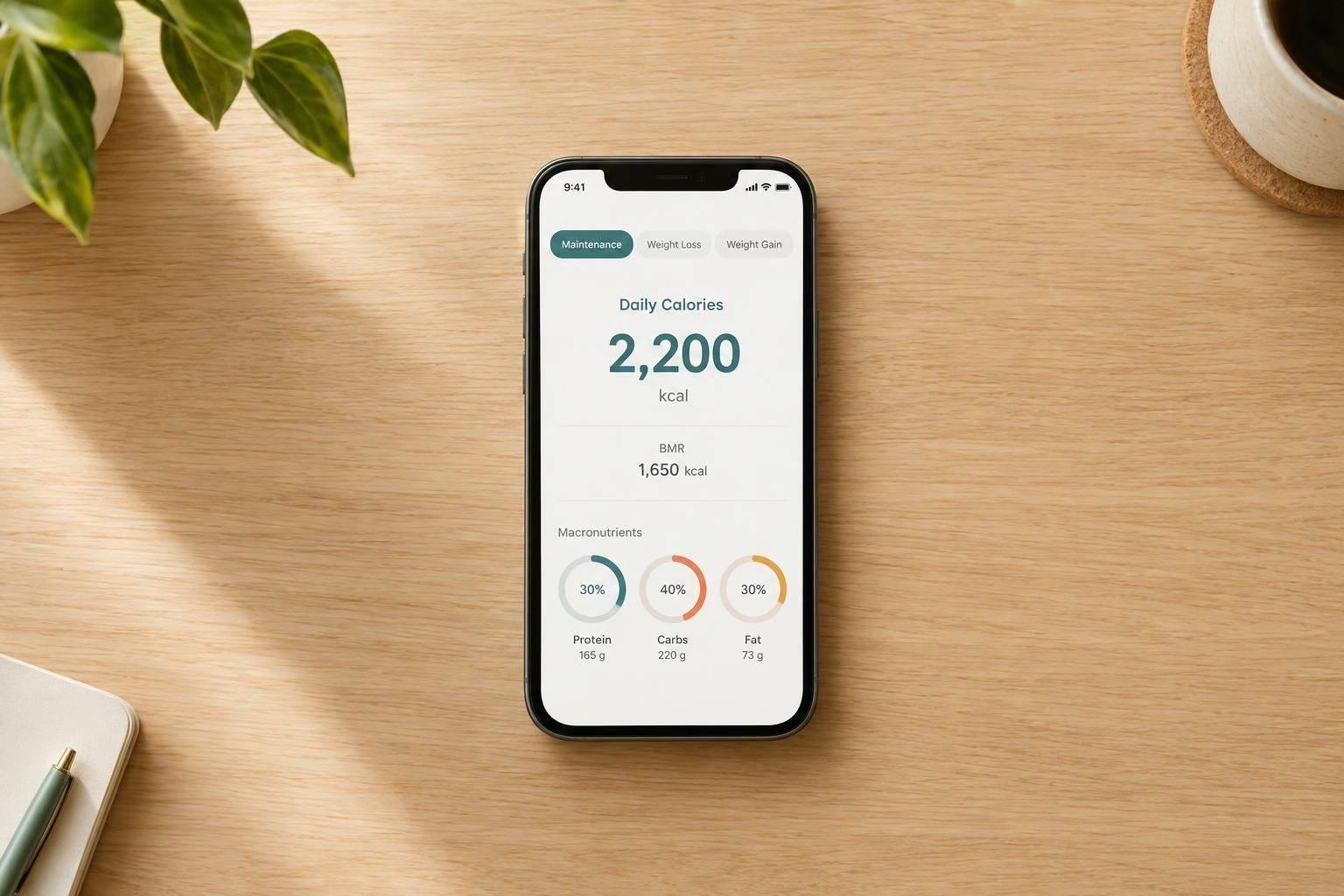
Estimate Your Daily Energy Needs
A good calorie calculator helps take the guesswork out of eating for your goals. Whether you want to maintain your weight, create a modest deficit, or add calories for muscle gain, having a clear starting point makes planning much easier. This tool estimates your basal metabolic rate using the Mifflin-St Jeor equation, then factors in your activity level to show your likely maintenance intake.
Built for Real-World Goals
The calculator supports both metric and imperial units, so it’s easy to use no matter how you track height and weight. After that, it adjusts your daily target based on whether you want to maintain, lose, or gain weight. That gives you a calorie estimate that’s practical, simple, and easy to apply to everyday meals.
More Than a Basic BMR Estimate
Along with BMR and maintenance calories, this daily calorie needs calculator can show an example macro split for protein, carbs, and fat. That’s useful if you want to turn a calorie target into a more structured nutrition plan. Like any calorie calculator, the result is still an estimate, but it’s a reliable way to set a baseline and make smarter adjustments over time.
FAQs
How accurate is this calorie calculator?
It’s a solid estimate, not a medical diagnosis. The calculator uses the Mifflin-St Jeor equation, which is one of the most widely used formulas for estimating basal metabolic rate, then adjusts for activity and your goal. That makes it very useful as a starting point, but real calorie needs can vary based on body composition, hormones, training style, stress, sleep, and health conditions. If your results in real life don’t match the estimate, it’s normal to adjust your intake over time.
What’s the difference between BMR and maintenance calories?
BMR is the number of calories your body needs at rest just to keep basic functions going, like breathing, circulation, and temperature regulation. Maintenance calories are higher because they also account for your daily movement and exercise. In other words, BMR is your baseline, while maintenance calories are your estimated total daily energy needs.
Should I choose mild or standard weight loss or gain?
For most people, a mild change is easier to stick with and often feels better day to day. Mild weight loss or gain uses a smaller calorie adjustment, which can support steadier progress and make hunger, energy, and training performance easier to manage. A larger change may work for some people, but consistency matters more than being aggressive. If you’re unsure, starting with the milder option is usually a smart move.




Leave A Comment